The Postal Service marked Route 66’s centennial with a commemorative Forever series issued on May 5, 2026, at the National Postal Forum in Phoenix. It is a handsome set, it sold well, and it has been written about extensively — usually with confident descriptions of what each stamp shows.
Those descriptions are worth treating carefully, because USPS itself never published them.
What the Postal Service Actually Documented
Here is the full extent of what the official releases establish:
- Eight different photographs, each appearing twice on a pane of 16 Forever stamps.
- Each design shows a site from one of the eight states Route 66 runs through — Illinois, Missouri, Kansas, Oklahoma, Texas, New Mexico, Arizona, and California.
- The photographs are by David J. Schwartz, who has made more than 40 trips along the route over 22 years.
- The pane was designed by Greg Breeding, a USPS art director, using existing photographs rather than images commissioned for the series.
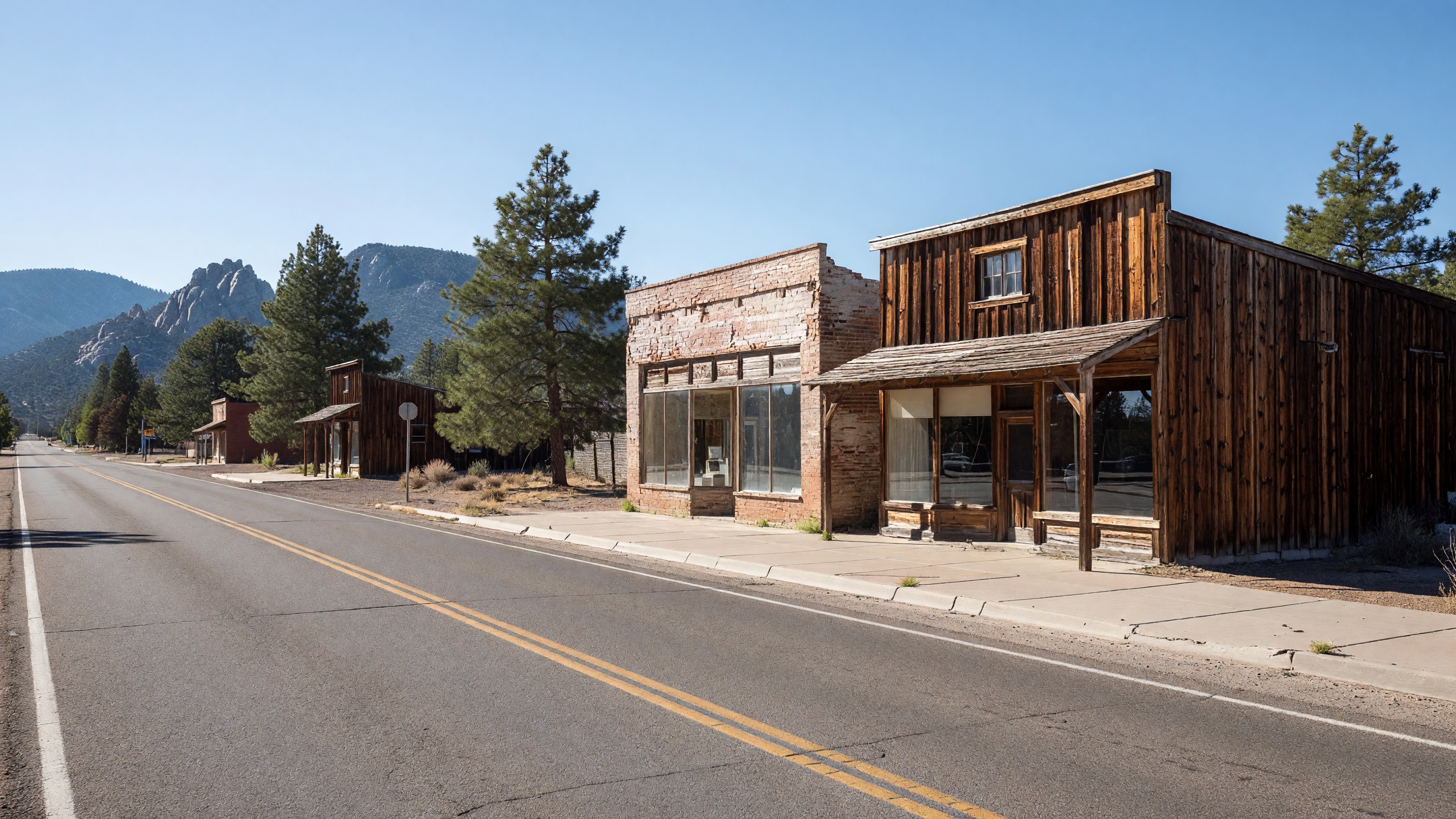
- The selvage — the border of the pane — carries a photograph of the highway stretching into the distance in Arizona.
- First-day issue: May 5, 2026, Phoenix Convention Center.
That is it. Across the national announcements in March and May and the state-level releases that followed, the Postal Service described the structure of the series without ever enumerating which landmark appears on which stamp.
What Can Be Confirmed, and What Cannot
A few subjects are verifiable from other documentation. The U-Drop Inn at Shamrock, Texas — the 1936 Tower Conoco station and café that is among the most photographed structures on the road — appears in the series.
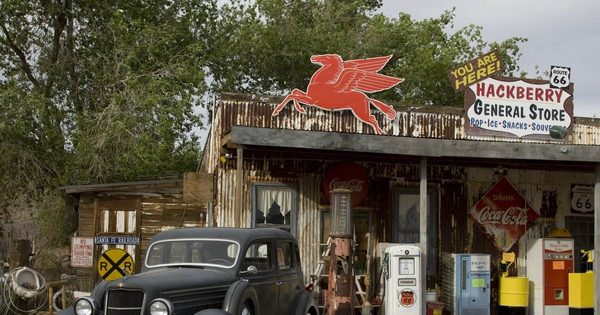
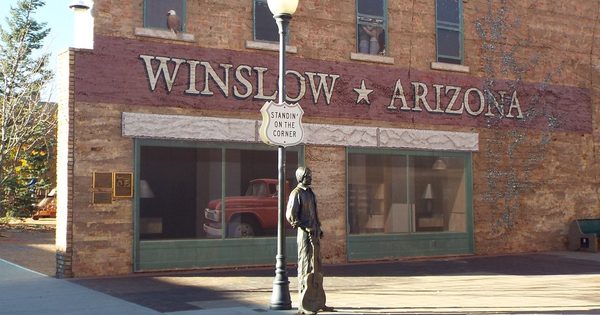
Beyond that, individual attributions circulating online generally trace back to people identifying sites from the stamp images themselves rather than to any published USPS list. That identification is often correct, since these are famous places and Schwartz photographed them recognizably. It is still inference rather than documentation, and it is worth knowing which you are reading.
The Kansas stamp is a small case study in the gap. USPS issued a state release announcing a photo exhibit of the Route 66 stamp at The Mollie in Galena on May 22, 2026, complete with a specially designed postmark for the day — and the release still did not say what the Kansas stamp depicts. It noted only that Kansas holds 13 miles of Route 66, which it described as filled with history and pride. Thirteen miles is the shortest segment of any of the eight states, and Galena is where most of it is.
Arizona’s Disproportionate Share
For anyone reading this from the Arizona corridor, the series tilts noticeably this way.
Arizona gets a stamp like every other state. It also gets the selvage image, which is the largest single photograph on the pane and the one that frames all sixteen stamps. And the first-day ceremony was held in Phoenix, making Arizona the issue state for a series covering eight.
That is defensible on the merits rather than merely fortunate. Arizona holds the longest continuous surviving stretch of the original road — the Seligman-to-Kingman alignment — and the state’s preservation movement is the reason “Historic Route 66” exists as a designation at all. If one state was going to carry the series’ framing image, the case for this one is strong.
On the Photographs Themselves
One detail in the official record is more interesting than it first appears: Breeding built the pane from existing Schwartz photographs rather than commissioning new work.
That is a meaningfully different editorial approach from most commemorative series, and it suits the subject. Twenty-two years and forty-plus trips produce an archive with a particular quality — images made because the photographer kept returning, in whatever light and weather a given trip offered, rather than images made to a brief on a scheduled shoot. Route 66 photography has a strong house style by now, heavy on golden-hour neon and dramatic sky, and an archive selected after the fact tends to resist that more than a commission would.
For Collectors and for Everyone Else
The practical notes are straightforward. These are Forever stamps, so they retain first-class value indefinitely regardless of future rate changes. They were issued in panes of 16 and sold through the Postal Store alongside a collector’s set. First-day covers from the Phoenix ceremony and the pictorial postmarks from state events — Galena’s among them — are the versions with any collecting premium; ordinary panes bought at a post office are postage.
If you are along the corridor, the more interesting acquisition is a pictorial postmark from one of the local events rather than the stamps alone. Those were genuinely limited to a day and a place, which is the part that will be hard to reconstruct later.
The Honest Summary
The centennial series is eight Schwartz photographs, one per state, twice each on a pane of 16, with Arizona on the selvage, issued in Phoenix on May 5, 2026. What it depicts state by state is knowable by looking at it and is not something the Postal Service ever put in writing.
That gap is minor as philatelic controversies go. It is worth flagging anyway, because Route 66 has a long-running problem with confident secondary accounts hardening into accepted fact through repetition. A stamp series is a low-stakes place to notice the pattern. The road’s actual history has higher-stakes examples.
The National Park Service Route 66 program maintains the corridor’s preservation record, and the USPS newsroom release is the primary source for the series’ issue details.