Before the Snow Cap Drive-In, before the preservation movement, before the pilgrims arrived from Tokyo and Stuttgart to meet Angel Delgadillo, there was a general store on Route 66 in Seligman that served the practical needs of a community that existed at the intersection of railroad commerce and highway travel.
The Seligman Sundries occupied the kind of commercial role that is difficult to describe to people who have grown up in the era of Walgreens and Amazon Prime. It was not simply a retail store. It was the place where a family could buy everything from aspirin to hard candy to a cold soda on a hot afternoon. It was a gathering spot in a town without a town square. It was, in the language of the era, a general store with soda fountain privileges — which meant it was also a place to sit down, order something cold, and hear the news.
This publication takes its name from that store, and we think it worth explaining why.
What a Sundries Store Was
The term “sundries” — from the Old English meaning “various small items” — described the mixed-goods character of stores that served communities before specialization took hold in American retail. A sundries store carried what people needed: patent medicines and household supplies alongside candy, tobacco, periodicals, and the fountain drinks and ice cream that made the store a social destination as well as a commercial one.
By the mid-twentieth century, the soda fountain component of a sundries store had become culturally central. The soda fountain was where young people gathered, where travelers stopped to cool down, where the social texture of a small town was maintained across hundreds of ordinary transactions. Route 66 towns like Seligman depended on these establishments not just commercially but socially — as the infrastructure of community life that no chain store model had yet displaced.
The National Park Service’s documentation of Route 66 commercial culture describes this type of establishment as foundational to the economic and social fabric of highway communities. The soda fountain sundry store was the community’s living room.
Seligman as a Commercial Hub
Seligman’s position on Route 66 made it a natural commercial hub for a stretch of northwestern Arizona that had few other population centers. The town sat between Ash Fork to the east and Kingman to the west, with limited alternatives for travelers or residents seeking goods and services.
The Santa Fe Railway maintained its division point in Seligman, which meant a stable workforce of railroad employees and their families lived in or near the town. These residents, combined with the steady stream of highway travelers and the regional population served by Seligman’s commercial district, sustained a range of businesses that would have been marginal in a purely agricultural community of similar size.
The sundries store benefited from all of these customer streams. Railroad workers came in on their days off. Travelers on Route 66 stopped for cold drinks and supplies. Local families made regular visits for household staples. The store functioned as the commercial anchor of a district that also included the hotel, the diner, the gas station, and the other businesses that made Seligman a complete stop rather than a pass-through.
The Bypass and the Store’s Decline
The opening of Interstate 40 through the Seligman area in 1978 disrupted every aspect of the town’s economy, and the sundries store was not exempted. The through-traffic that provided a significant portion of the store’s customer base — the travelers stopping for cold drinks and necessities — disappeared almost immediately.
What remained was the local customer base: the railroad workers, the residents, the families who had been shopping at the store for years. This was enough to sustain reduced operations for some time, but it was not enough to replace the highway traffic that had made the business fully viable.
The trajectory of the Seligman Sundries in the post-bypass era mirrors that of dozens of similar establishments across the Route 66 corridor. Some closed immediately as the traffic shifted. Some lingered in reduced form for years before eventually closing. Some managed the transition by serving a purely local function. The exact history of the Seligman Sundries building and operation through this period is part of the broader story of the town’s economic contraction that Angel Delgadillo’s 1987 meeting sought to address.
The Building’s Place in the Historic District
The building that housed the Seligman Sundries is part of the Seligman Commercial Historic District, listed on the National Register of Historic Places. As a commercial structure dating from the Route 66 era, it contributes to the architectural character that the historic district designation recognizes and seeks to preserve.
The building’s design is typical of the mid-twentieth century commercial vernacular that defines the district: a simple masonry or frame structure with a storefront adapted for retail display, modest in architectural ambition but functionally suited to the climate and the commercial requirements of a highway community. The wide overhangs and shaded storefronts that characterize many Seligman commercial buildings reflect the practical response to Arizona’s climate — shade was essential for a storefront that needed to attract foot traffic on a street where summer temperatures could be brutal.
Why We Use the Name
This publication is called Seligman Sundries because the sundries store represents the kind of commercial and social institution that Route 66 produced at its best: a place that served everyone, that existed at the intersection of local life and traveler culture, and that maintained the connective tissue of a community that the Interstate era tried to sever.
We cover Seligman and the Route 66 corridor with the same mixture of the practical and the social that a sundries store represented: the useful travel information alongside the history, the food alongside the preservation story, the specific details that help you visit alongside the larger context that helps you understand what you are seeing.
The store itself is part of the history we document. The domain name seligmansundries.com carried backlinks from publications that recognized the original store’s significance — a record of coverage that predates our publication. We have inherited that attention and take the obligation to do it justice seriously.
What Travelers Should Know
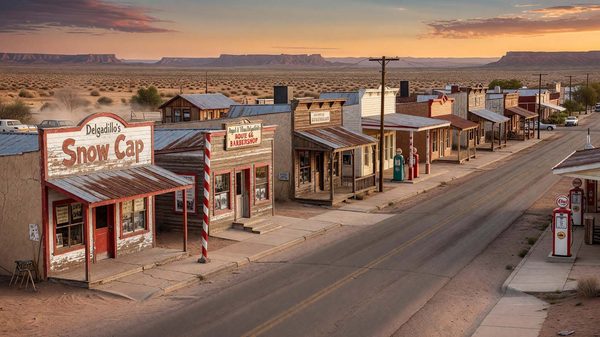
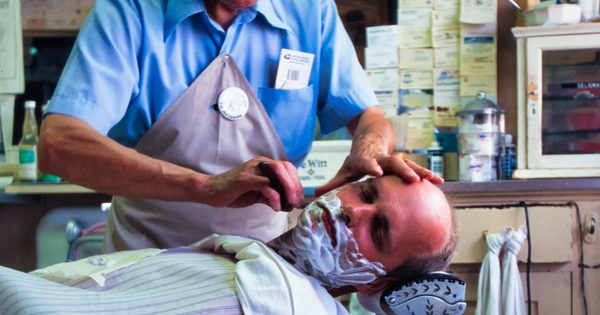
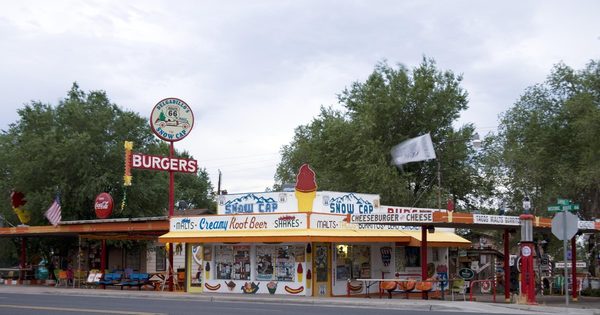
Visitors to Seligman looking for the spirit of the original sundries store will find it distributed across the surviving businesses of the commercial district rather than concentrated in a single establishment. The gift shops carry the mixed-goods character of the old sundries trade. The Snow Cap Drive-In carries the soda fountain spirit. The barbershop carries the social function of a place where people gather and talk.
A sundries store was always a hybrid — retail and social, commercial and communal, serving both the needs of the moment and the rhythms of a long relationship with the community it served. Seligman’s surviving commercial district works the same way, just across more separate establishments than a single store could contain.
Read our complete guide to visiting Seligman for practical details on the town’s current businesses and what to see.
Frequently Asked Questions
Is the original Seligman Sundries building still standing?
The building associated with the Seligman Sundries is part of the Seligman Commercial Historic District and is among the surviving structures in the downtown commercial area. The condition and current use of the specific building has varied over time.
Was the Seligman Sundries a well-known stop on Route 66?
The store was known primarily as a community anchor serving local residents and travelers rather than as a destination attraction in the way that the Snow Cap Drive-In or the Delgadillo Barbershop became. It was essential infrastructure rather than a spectacle — which is perhaps the more durable form of importance.
Where does the name “sundries” come from?
The term derives from Old English and refers to various small articles or mixed goods. A sundries store carried a broad range of small goods — medicines, household supplies, candy, tobacco, periodicals — alongside the soda fountain service that made it a social destination. The mixed-goods character is captured in the word itself.
Why does this publication use the Seligman Sundries name?
We take the name as a reference to the institution that the original store represented: a place serving travelers and locals alike, grounded in practical usefulness but also in community and hospitality. It is the spirit in which we approach covering Seligman and Route 66.
Hero image: “Historic Seligman Sundries, Arizona, USA” by Alexander Blecher, CC BY-SA 4.0, via Wikimedia Commons (cropped).